
Nutrition and Eye Health: Foods That Help Protect Your Vision as You Age
As we get older, it might seem like vision changes — such as difficulty seeing things up close, requiring additional lights and needing prescription eyeglasses — are an unavoidable fact of life. While we’re all susceptible to declining eye health as we age, we can make healthy lifestyle choices that keep our eyes and vision in better shape for longer. Those choices often start in the kitchen, where making beneficial selections as part of an eye-healthy diet can help prevent or delay eye disorders.
As we age, vision issues that make it more difficult to enjoy hobbies and carry out our normal life routines become more common, including:
· Age-related macular degeneration (AMD) – This chronic eye disease is the leading cause of vision loss in America. It affects the macula, a special part of the retina that controls your sharp, central vision. There is no cure for AMD, but treatments can slow its progression.
· Cataracts – The lens of the eye is typically clear, but as we age, it can begin to “cloud,” making those living with this condition feel like they are constantly looking through a fogged-up window. Cataracts often affect older adults, developing slowly as the clouding worsens and prevents clear images from reaching the retina, causing blurry vision.
· Glaucoma – One of the most common age-related eye diseases and the second-leading cause of blindness worldwide, glaucoma is a disease in which the optic nerve thins over time. The thinning of this nerve, which transmits information from the eyeball to the brain, causes certain areas of vision to vanish.
Now that you understand the most common age-related eye issues, let’s explore the connection between diet and vision, as well as foods rich in beneficial vitamins and minerals that can support good eye health.
A Feast for the Eyes
Eating nutritiously can offer a bounty of health benefits, lowering harmful blood sugar levels, decreasing cholesterol and giving our bodies the energy needed to get through the day. For eye health, a diet rich in plant-based foods and fish can help reduce your risk of developing age-related eye conditions or prevent them from worsening.
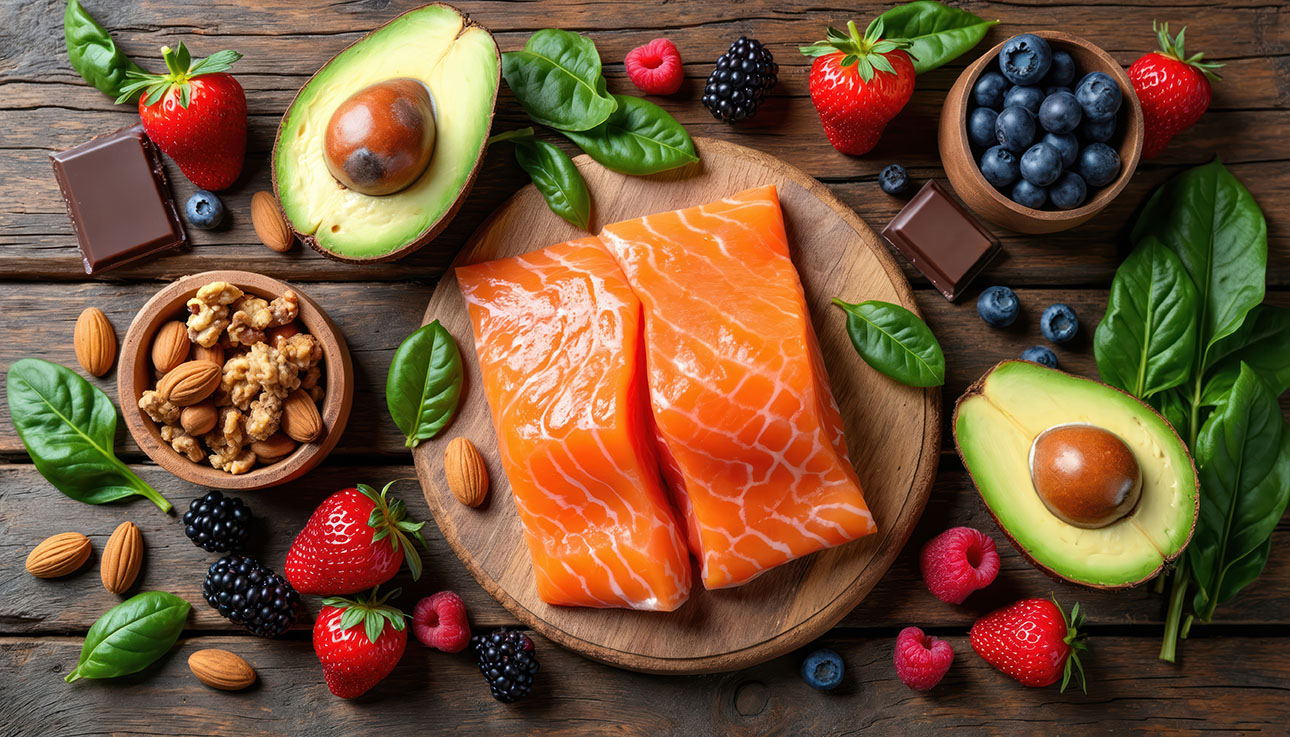
One of the most popular dietary trends for eye health is eating Mediterranean-inspired meals, according to the American Academy of Ophthalmology (AAO). This generally includes dark leafy vegetables, fruits, nuts, whole grains and healthy oils, in addition to fish heavy in omega-3 fatty acids as the primary source of protein, such as salmon, tuna and trout.
These foods are full of beneficial vitamins, minerals and other compounds that can help bolster your eye health. Continue reading to learn more about the specifics of these essential nutrients.
Vitamin A
Vitamin A is an essential nutrient that helps support eye function in the retina and is required for the photoreceptors in the eyes, which determine vision quality in low-light conditions, according to Hopkins Medicine.
While Vitamin A is a common supplement, incorporating it naturally into your diet can include eating more of the following:
· Dairy, such as whole milk
· Egg yolks
· Liver
· Spinach
· Carrots
· Sweet potatoes
Vitamin C
The fluid inside the eyes is naturally high in vitamin C, which helps protect the lens from oxidative stress and ultraviolet (UV) light damage, things that can cause the lens to grow cloudy and impair your vision. A diet rich in vitamin C from whole foods, not supplements, is believed to help lower the risk of developing cataracts and slow their progression.
Find more Vitamin C in:
· Citrus, such as oranges, grapefruits, lemons and limes
· Strawberries and blackberries
· Bell peppers
· Broccoli and cauliflower
· Tomatoes
· Spinach
Vitamin E
Vitamin E helps protect eye cells from unstable molecules called free radicals, which can damage the delicate fatty acids in the retina vital for the proper function of light-sensing photoreceptor cells.
Top sources of Vitamin E include:
· Seeds and nuts, such as almonds, hazelnuts and peanuts
· Avocados
· Dark greens, such as spinach, collard greens and broccoli
Flavonoids and Carotenoids
How do your favorite fruits and vegetables create their eye-catching colors? The answer lies in flavonoids and carotenoids, two key compounds that give plants their striking coloration.
While flavonoids create red, blue, purple and yellow colors and carotenoids create bright yellow, orange and red, they do more than offer beautiful hues; they also provide antioxidant properties that benefit the eyes.
Two carotenoids in particular, lutein and zeaxanthin, help filter high-energy blue light from the sun and digital screens, reducing oxidative stress that can damage eyes. These compounds are found in dark leafy greens like chard, spinach and kale, as well as raspberries and peaches.
Flavonoids help shield eye cells from the same oxidative stress while reducing inflammation and supporting healthy blood flow into ocular tissues. You can find them in teas, red wine and dark chocolate, as well as red and yellow onions, red leaf lettuce, kale, blueberries and other brightly pigmented foods.
The dietary choices we make every day contribute to our overall health, for better or for worse. When it comes to our eye health, eating a diet heavy in fried, processed foods, sugar and high-fat dairy rich in saturated fats can slowly but surely degrade your eye health over time, contributing to the progression of AMD and other vision issues. Making beneficial choices through an eye-healthy diet can not only help protect your vision but also improve your overall health. For more tips on how to preserve or improve your eye health, visit healthyvisionassociation.com/articles.
Articles in this newsletter are supposed to be informative, enlightening and helpful to you. While all information contained herein is meant to be completely factual, it is always subject to change. Articles are not intended to provide medical advice, diagnosis or treatment. Consult your doctor regarding any concerns you have.
Benefits may not be available at all membership levels. For more information, or to upgrade your membership, please call 1.800.992.8044.