
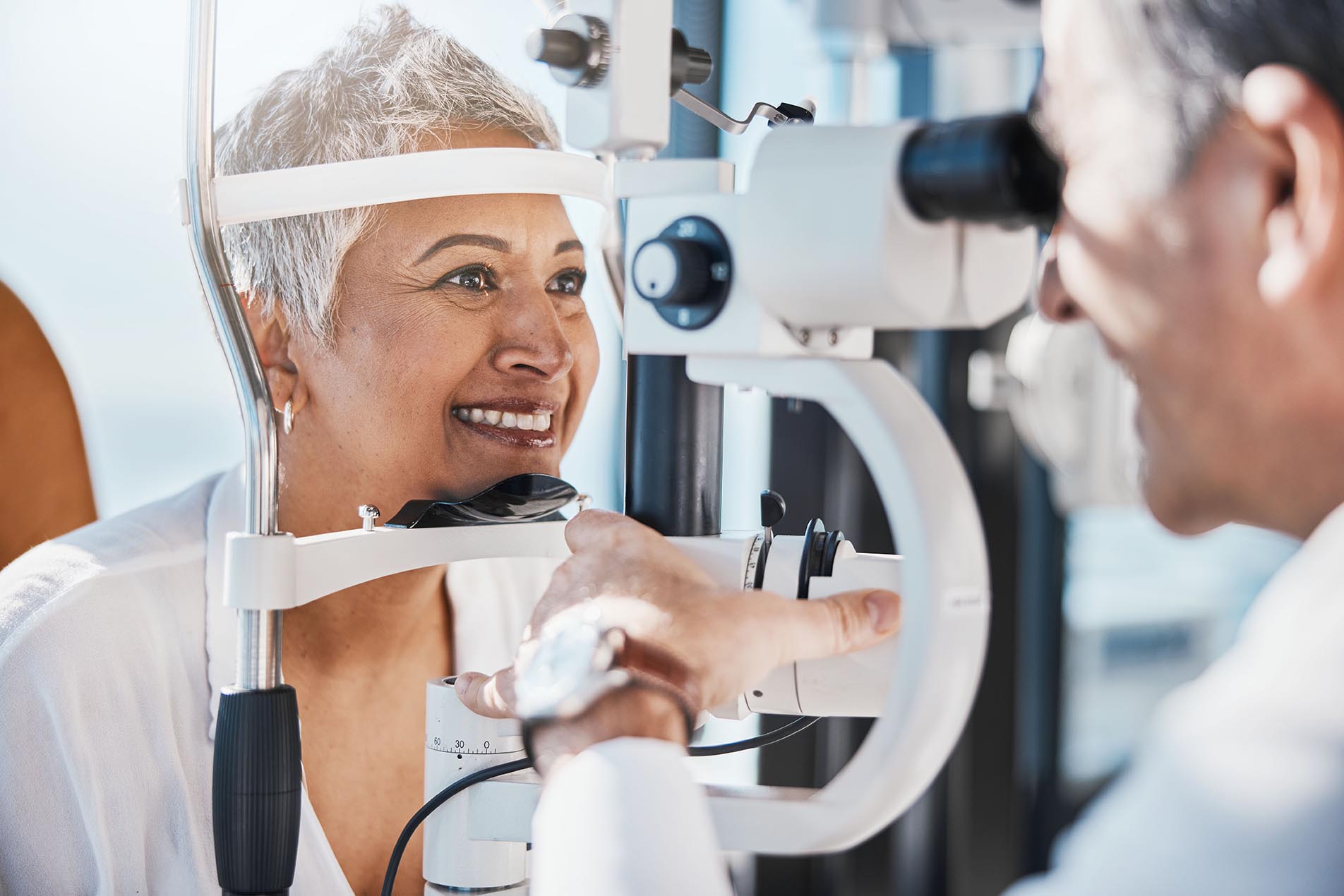
Understanding Age-Related Vision Changes: What to Expect as You Grow Older
As you age, it’s normal to notice vision changes. Having difficulty seeing things up close, needing additional light to participate in activities, like reading or crafting, and needing new prescriptions for corrective eyewear are just a few of the typical changes you will experience.
However, your age and medical history can also leave you vulnerable to eye conditions and diseases that can be damaging or irritating. While some of these are unavoidable, others can be detected early through comprehensive eye exams and managed with lifestyle changes.
To gain a better understanding of how your vision will change as you age, read our breakdown of common age-related conditions you can experience. Eye changes often happen slowly, with significant symptoms more common in certain age ranges.
Once You Reach 40…
Young eyes are bright, clear and elastic, allowing people to process visuals quickly and smoothly. By the time you reach 40, that flexibility lessens as the lens of the eye hardens, resulting in some of the first signs of age-related vision changes. Genetics and family history can affect your eye health as you age, but some common conditions include:
· Presbyopia – When you’re trying to read something with small print, such as a menu or book, do you find yourself holding it several different ways before you find that “sweet spot” — usually at arm’s length — that allows you to read the blurred letters perfectly? If so, you could be experiencing presbyopia, the natural, gradual loss of your eyes’ ability to focus on nearby objects. In addition to a need to hold reading material far away to focus the letters and blurred vision at normal reading distance, presbyopia can also include eyestrain or headaches after doing close-up tasks, like working, crafting or other important tasks.
If you experience a significant change in your vision, such as blurriness, flashes of light, double vision or sudden loss of vision in one eye, seek immediate medical attention.
· Needing more light – In addition to needing to hit that “sweet spot” to read, you may also find yourself reaching for a lamp or your phone to serve as an additional light source. Our eyes change slowly, so while you might not have needed a reading lamp in your younger years, once you reach 40, you’ll likely need more light to carry out your work and hobbies.
· Reduced tear production – Your eyes need a healthy tear film — made up of layers of fatty oils, aqueous fluid and mucus — to keep the eyes comfortable and functioning properly. As you age, however, tear production can decrease, resulting in dry, irritated eyes. Chronic dry eye can lead to eye infections, damage to the surface of the eyes and an inability to participate in activities you once loved, such as reading.
Glaucoma – One of the leading causes of blindness in people over 60, glaucoma is a condition characterized by damage to the optic nerve, an essential component of the eye that transmits information from the eye to the brain. Risk for glaucoma increases significantly between the ages of 40 and 60; early diagnosis is critical to slow or stop its progression, as structural damage cannot be reversed.
Glaucoma commonly occurs when the eye’s drainage system becomes blocked, disrupting the healthy intraocular pressure (IOP) as fluid builds up and increases pressure. This high pressure slowly damages the nerve, leading to the development of blind spots.
Once You Reach 60…
If your 40s are characterized by increasingly noticeable vision changes and symptoms, plus the need for new glasses, bifocals and additional lighting, then your 60s are when those changes become markedly more significant.
At this age, you are more likely to develop certain eye conditions, including:
· Cataracts – As you’ll read in the other article in this month’s newsletter, certain proteins in your eye’s lens start to break down around age 40. By the time you reach 60, this protein breakdown can lead to cloudy areas in your vision, known as cataracts. Cataracts are characterized by blurriness, prescription changes, sensitivity to light, difficulty seeing at night and more. Without surgery — the only treatment for this eye disease — the slow decline in vision will continue, often resulting in severe visual impairment or blindness.
· Macular degeneration – Age-related macular degeneration (AMD) is one of the most common causes of severe eyesight loss among people 50 and older, according to Johns Hopkins Medicine. AMD primarily affects the eye’s central vision and the ability to see fine details, and while people rarely go blind from AMD, those with advanced stages report the inability to drive, see faces, read smaller print or perform other tasks that require central vision.
· Diabetic eye complications – For those living with diabetes, managing your blood sugar is a lifelong mission, especially as consistently high levels can cause a variety of eye issues. Long-term high blood sugar damages essential eye anatomy, potentially leading to diabetic retinopathy or diabetic macular edema. The best way to avoid these conditions or slow their progression is to closely monitor your blood sugar and get regular eye exams as recommended by your doctor.
· Dry eye disease – As covered earlier, your 40s and 50s can be marked by reduced tear production, causing irritation and discomfort. Once you reach your 60s, certain hormonal changes, medication and reduced tear gland function make developing dry eye disease much more likely. This chronic condition is characterized by burning, stinging, grittiness, redness and irritated eyes, or even corneal ulcers and scarring. There are a variety of treatment options available for this condition, but it’s important you get help before your eyes are seriously damaged.
Once You Reach 80…
By the time you are 80 years old, common conditions like cataracts, macular degeneration and dry eye disease will change how you see the world by reducing your visual field, affecting how you register colors or increasing your sensitivity to light and glare.
No matter what conditions you develop at this age or what level of vision loss you experience, it is still important to see your ophthalmologist regularly. They can provide treatments and surgery, plus connect you with low-vision rehabilitative services so you can live more comfortably and capably.
Age-related vision changes are a fact of life, but there are solutions — such as corrective lenses, prescription drugs and surgical interventions — that can help you preserve your eye health for as long as possible. As many of these changes are slow-moving and difficult to notice, it’s important to get regular eye exams.
Articles in this newsletter are supposed to be informative, enlightening and helpful to you. While all information contained herein is meant to be completely factual, it is always subject to change. Articles are not intended to provide medical advice, diagnosis or treatment. Consult your doctor regarding any concerns you have.